

Learn the most effective strategies for streamlining your sales process and maximising your results. Read this comprehensive guide today! Coaching and consulting businesses rely heavily on sales. A business can’t survive without sales, and without sales, you can’t survive! Therefore, a successful sales process must be streamlined and optimized for efficiency.
It doesn’t matter if you’re a seasoned sales pro or just starting out, there are always ways to improve the sales process. As a coach or consultant, this blog post will discuss some tips for streamlining your sales process. Among the topics we will discuss are how to create an effective sales pipeline, automate sales tasks, and use sales training to improve.
Do you know businesses typically close only 4-10% of their prospects on average? This demonstrates the importance of optimizing your sales process to maximize conversions. (This statistic is from a study by Harvard Business Review that surveyed 2,240 B2B companies.) That’s like a 1 in 10 chance of success, so make sure you’re at least bringing your A game to the table!
What is a sales process?
A sales process is a structured approach to sales that includes steps from identifying targets to closing sales and post-sale follow-up. It usually follows the same basic outline but can be customized and adapted depending on your individual business needs. For instance, a sales process might include steps such as researching prospects, making contact, presenting the product or service, and following up with customers after the sale.
Jeffrey Gitomer, an American author, speaker, and trainer, once wrote: “The buyer, the prospect, the customer expects you to have knowledge of their stuff, not just your stuff.”
What is a sales pipeline?
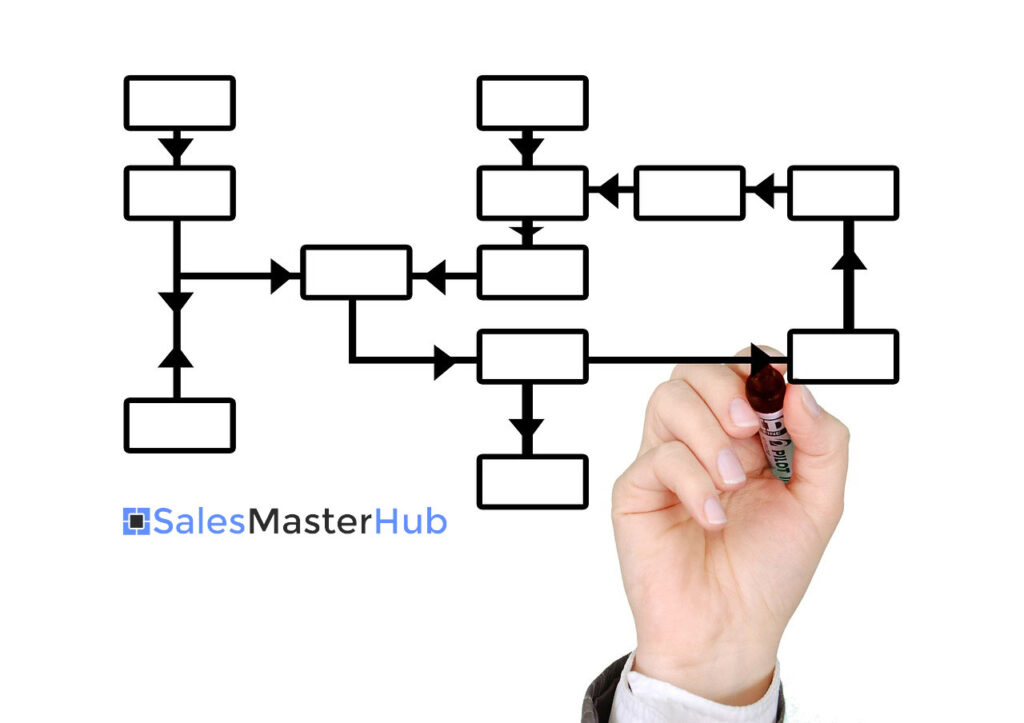
A sales pipeline is a visual representation of your sales process that outlines each step of the sales cycle and shows you how many leads are at each stage. This helps you to identify areas where sales are strong and weak so that you can adjust your sales strategy accordingly. How do I create an effective sales pipeline?
As the American author Steve Maraboli once wrote: “Although goals are important, having a plan of action is vital to the success of those goals. Having a goal with no plan of action is like wanting to travel to a new destination without having a map.”
How do you streamline your sales process to make it as effective and efficient as possible?
1. Focus on quality leads – Why waste time working a lead if there’s no chance of a sale? Quality leads are your key to sales success, not quantity.
2. Automate sales functions – Automation makes sales processes and sales pipelines more efficient by reducing wasted time on mundane tasks like data entry. Use automation tools that allow you to quickly store and access customer data.
3. Track sales performance – Knowing the sales performance of your sales process will help you make improvements to it. Make sure to track sales data regularly and use analytics tools for in-depth insights into sales trends.
4. Implement sales enablement – Sales enablement is all about providing the sales team with the tools, resources and knowledge they need to be successful. Use sales enablement tools to streamline sales processes and sales pipelines.
By following Way, you can easily streamline your sales process and sales pipeline in no time. Utilize the strategies above to make sure that every lead you work with results in a sale!
For a coach/consultant, what is the most effective sales process?
There is no one-size-fits-all answer to the best sales process for a coach or consultant, as the best approach will depend on factors such as the target market, the offerings, and the individual’s personal style and approach. However, a commonly effective sales process for coaches and consultants includes the following steps:
- Prospecting: Identifying and reaching out to potential clients who could benefit from your services.
- Qualification: Evaluating whether a prospect is a suitable fit for your services and if there is a need that you can address.
- Discovery: Conduct a deep dive into the prospect’s needs, pain points, and goals.
- Presentation: Sharing how you can help the prospect address their needs and reach their goals through your services.
- Objection handling: Anticipating and addressing any objections the prospect may have about your services.
- Closing: Asking for the sale and securing a commitment from the prospect.
- Follow-up: Maintaining communication and building the relationship with the client post-sale.
It’s important to remember that the sales process is not a linear one, and different steps may require more or less time and attention depending on the situation. The most important aspect is to listen to the client and understand their needs in order to effectively address them and offer a solution.
You know what they say: If you can’t listen to the client, always have a spare pair of ears handy!
How could a coach attract more leaeds?
Prospecting is an important step in the sales process for a coach, as it involves identifying and reaching out to potential clients who could benefit from your services. Here are some ways a coach can prospect:
- Networking: Attend industry events, conferences, and networking opportunities to meet potential clients and build relationships.
- Referrals: Ask for referrals from current clients, colleagues, or other contacts in your network.
- Online presence: Establish a strong online presence through a professional website, social media accounts, and other channels to reach a wider audience.
- Content marketing: Create valuable content such as blog posts, videos, and webinars to educate and attract potential clients.
- Email marketing: Send targeted and personalized email campaigns to prospects to introduce yourself and your services.
- Direct mail: Send targeted direct mail campaigns to potential clients to grab their attention and introduce yourself and your services.
- Public speaking: Speak at events and conferences to share your expertise and build your reputation as a coach.
It’s important to remember that prospecting is an ongoing process and requires persistence, patience, and effort to be effective. It’s also important to continually evaluate and refine your prospecting strategies to find what works best for you and your target market.
But hey, if all else fails, you can always just throw a Hail Mary and hope for the best!
How could a coach Qualify prospects?
Qualifying prospects is an important step in the sales process for a coach, as it involves evaluating whether a prospect is a good fit for your services and if there is a need that you can address. Here are some ways a coach can qualify prospects:
- Ask questions: During the discovery phase, ask open-ended questions to understand the prospect’s needs, pain points, and goals. This information will help you determine if there is a fit between their needs and your services.
- Evaluate budget: Discuss the prospect’s budget and determine if they have the financial resources to invest in your services.
- Assess motivation: Evaluate the prospect’s level of motivation to make changes and reach their goals, as this will impact their willingness to invest in coaching services.
- Evaluate decision-making authority: Determine who the decision-maker is and if they have the authority to invest in your services.
- Identify objections: Anticipate and address any objections the prospect may have about your services.
- Evaluate past experience: Ask the prospect about their past experience with coaching or similar services to determine if they are a good fit for your offerings.
By thoroughly qualifying prospects, you can prioritize your efforts and focus on working with those who are most likely to benefit from and invest in your services. This will ultimately lead to a higher conversion rate and more successful outcomes for your clients.
Ljupka Cvetanova, a Serbian writer, wrote: “Don’t judge a book by its cover. Judge it by its publisher.”
How could a coach/consultant conduct a discovery call/session?
A discovery call or session is an important step in the sales process for a coach or consultant, as it involves conducting a deep dive into the prospect’s needs, pain points, and goals. Here are some steps to conduct a successful discovery call or session:
- Preparation: Before the call or session, research the prospect and their business to gain a better understanding of their needs and goals.
- Establish rapport: Begin the call or session by building rapport and establishing a connection with the prospect. This can be done by asking about their background, interests, and goals.
- Ask questions: Use open-ended questions to uncover the prospect’s needs, pain points, and goals. This information will help you determine if there is a fit between their needs and your services.
- Listen actively: During the discovery call or session, listen actively to the prospect’s responses and take notes to ensure you have a clear understanding of their situation.
- Clarify: If there is any confusion or uncertainty, take the time to clarify and ask follow-up questions to get a complete picture.
- Summarize: At the end of the discovery call or session, summarize the key points discussed and ensure that you have a clear understanding of the prospect’s needs and goals.
- Next steps: Agree on the next steps, such as scheduling a follow-up call or sending a proposal, to move the relationship forward.
By conducting a thorough discovery call or session, you will be able to gather valuable information about the prospect’s needs and goals, and position yourself as a trusted advisor who can help them achieve their desired outcomes.
It’s like a medical exam in many ways; the doctor must ask the right questions and examine the patient’s symptoms in order to properly diagnose the issue and prescribe the right course of action.
Sharing a presentation is an important step in the sales process for a coach or consultant, as it provides an opportunity to showcase your expertise, experience, and approach. Here are some steps to deliver a successful presentation:
- Preparation: Before the presentation, research the prospect and their business to gain a better understanding of their needs and goals. Customize your presentation to address their specific challenges and opportunities.
- Establish credibility: Begin the presentation by establishing your credibility and expertise in your field. Share relevant background information, such as your experience and qualifications, to build trust with the prospect.
- Focus on the prospect: Make the presentation about the prospect, not about you. Focus on their needs, pain points, and goals, and show how your services can help address these challenges and opportunities.
- Use visuals: Use visual aids, such as slides, images, or videos, to enhance your presentation and make it more engaging and memorable.
- Engage the audience: Encourage interaction and engagement during the presentation. Ask questions, seek feedback, and involve the prospect in the conversation.
- Summarize: At the end of the presentation, summarize the key points discussed and emphasize the value you can provide to the prospect.
- Next steps: Agree on the next steps, such as scheduling a follow-up call or sending a proposal, to move the relationship forward.
By delivering a clear, engaging, and customized presentation, you will be able to demonstrate your expertise and approach and position yourself as a valuable partner to the prospect.
How could a coach/consultant handle objections?
Handling objections is an important part of the sales process for a coach or consultant, as it involves addressing and overcoming any objections or concerns the prospect may have about your services. Here are some steps to effectively handle objections:
- Listen actively: Listen carefully to the objection and make sure you understand the root cause of the concern.
- Acknowledge the objection: Validate the prospect’s concern and acknowledge that it’s a valid point. This will help build rapport and demonstrate that you understand their perspective.
- Address the concern: Provide a clear and concise response that addresses the objection and highlights the value of your services. Use real-life examples and data to support your arguments.
- Ask questions: Use questions to further understand the objection and gain more information. This can also help shift the conversation back to the benefits of your services.
- Provide alternatives: If the prospect is not satisfied with your response, consider offering alternative solutions or approaches that can address their concern.
- Emphasize benefits: Throughout the conversation, emphasize the benefits of your services and how they can help the prospect achieve their goals.
- Follow up: After the conversation, follow up with the prospect to ensure their concerns have been resolved and that they are still interested in your services.
By handling objections effectively, you will be able to address any concerns the prospect may have and demonstrate the value of your services, which will increase the likelihood of a successful outcome.
How could a coach/consultant close sales?
Closing a sale is the final step in the sales process for a coach or consultant, and it involves securing the prospect’s commitment to engage your services. Here are some steps to effectively close sales:
- Review the decision criteria: Before closing the sale, review the decision criteria you established earlier in the process to ensure the prospect’s needs and goals are aligned with your services.
- Recap the value proposition: Recap the key benefits and value of your services, and how they can help the prospect achieve their goals.
- Address any remaining objections: If there are any remaining objections or concerns, address them one by one and provide solutions or alternatives.
- Ask for the sale: After addressing any objections, confidently ask for the sale. This can be done by saying something like, “Based on what we’ve discussed, are you ready to move forward with our services?”
- Provide options: If the prospect is not ready to make a decision, provide options for them to consider, such as scheduling a follow-up call or sending a proposal.
- Close on next steps: If the prospect is ready to move forward, agree on the next steps and secure their commitment to engage your services.
By effectively closing the sale, you will be able to secure the prospect’s commitment and move forward with delivering value to them. However, it’s important to remember that closing a sale is just the beginning of the relationship, and ongoing communication and follow-up are essential to maintaining and growing the relationship over time.
How could a coach/consultant do and conduct follow-ups to close a lead and or onboard clients?
Follow-up is an important part of the sales process for a coach or consultant, as it helps to build and maintain the relationship with the prospect, and increases the likelihood of closing a lead or onboarding new clients. Here are some steps for conducting effective follow-ups:
- Schedule follow-ups: Schedule follow-up calls or meetings with the prospect to maintain regular communication and keep the relationship moving forward.
- Send reminders: Send reminders or confirmation emails prior to scheduled follow-up calls or meetings to ensure the prospect is prepared and ready to engage.
- Review previous discussions: Before each follow-up, review previous discussions and notes to ensure you are fully prepared and have a clear understanding of the prospect’s needs and goals.
- Offer value: During each follow-up, offer value by sharing relevant information, resources, or insights that can help the prospect achieve their goals.
- Address objections: If there are any objections or concerns, address them promptly and provide solutions or alternatives.
- Confirm next steps: After each follow-up, confirm the next steps in the process and ensure that the prospect is aligned and comfortable with the timeline and process.
- Document progress: Document the progress of each follow-up in a central place, such as a CRM, to ensure you have a clear record of the relationship and can track the status of each lead.
By conducting effective follow-ups, you will be able to build and maintain the relationship with the prospect, increase the likelihood of closing the lead, and onboard new clients. Remember, follow-up is a key factor in the success of the sales process, and it requires ongoing effort and dedication to maintain and grow the relationship.
Why would a coach/consultant use a CRM to manage the sales process with a CRM?
A coach or consultant may use a Customer Relationship Management (CRM) system to manage the sales process for several reasons:
- Centralized data storage: A CRM system provides a centralized repository for storing and managing all the information related to your leads, prospects, and clients, making it easier to access and analyze the data.
- Lead and opportunity tracking: A CRM system provides the ability to track leads, opportunities, and the sales pipeline, making it easier to manage and prioritize the sales process.
- Automated follow-up: With a CRM system, you can set up automated follow-up and reminders for key milestones in the sales process, reducing the risk of missed opportunities or lost leads.
- Collaboration and teamwork: A CRM system can be used by multiple team members, making it easier for teams to collaborate and work together on the sales process.
- Improved customer experience: By having a centralized repository for customer data, a CRM system enables you to provide a more personalized and tailored experience to your prospects and clients.
- Analytics and reporting: A CRM system provides robust analytics and reporting capabilities, allowing you to gain insights into the performance of your sales process and identify areas for improvement.
- Automation: A CRM system can automate repetitive tasks, such as sending follow-up emails, scheduling appointments, and updating lead status, freeing up time for more important tasks and reducing the risk of human error.
- Sales funnels: A CRM system can be used to create and manage sales funnels, providing a visual representation of the sales process and helping to identify areas for improvement.
- Website integration: A CRM system can be integrated with a coach or consultant’s website, allowing for seamless data transfer and automation of key sales processes.
- Invoicing: A CRM system can be used to create and send invoices to clients, making it easier to manage the financial aspects of the business.
- Scheduling: A CRM system can be used to manage scheduling and appointment booking, reducing the time and effort required to coordinate and manage the calendar.
- Email marketing: A CRM system can be integrated with email marketing tools, enabling you to automate and personalize your marketing campaigns, and improve the effectiveness of your marketing efforts.
By using a CRM system, a coach or consultant can streamline and optimize the sales process, provide a better customer experience, and ultimately increase the likelihood of success in closing leads and onboarding new clients.
What is leadership lid?
Leadership lid is the concept of creating and maintaining a sales cap, or limit to how many sales you can manage at one time. This helps ensure that you don’t spread yourself too thin and are able to give each sales opportunity the attention it deserves. By setting a sales lid, you will be able to focus on quality rather than quantity and increase the sales effectiveness of your sales process. Leadership lid also helps coaches and consultants set realistic sales goals, as well as prioritize their most important sales activities to ensure maximum success.
By taking a disciplined approach to sales management using leadership lid, you can effectively streamline your sales process, maximize productivity, and optimize customer engagement. This is a great way to ensure that sales efforts are streamlined, efficient, and focused on the right goals.
Using a combination of leadership lid and a CRM system can help coaches and consultants maximize sales performance, lead generation, customer experience, and ultimately sales success. By leveraging these tools to optimize sales processes, you can make the most of sales opportunities and drive more sales for your business.
On the flip side:
The “Leadership LID” refers to the limitations or constraints that individuals or organizations may have on their growth and potential. The idea is that if a business is currently generating 100 leads, they may be stuck at that level unless they adopt a different mindset or acquire new knowledge to become a 200 lead business.
In order to overcome this “Leadership LID,” it’s important to have a coach or mentor that can help their clients identify their revenue and marketing goals and develop a strategic plan to achieve those goals. This may involve increasing their ad spend, doubling their marketing efforts, and carefully calculating the resources required to reach their desired outcomes.
The coach/mentor can also help clients align their spending with their goals and coach them to think beyond their current level of performance. This includes pre-investing in growth, so that the client is ready to take advantage of new opportunities as they arise. By helping their clients break through their “Leadership LID,” the coach or consultant can help them reach their full potential and achieve their desired business outcomes.
In order to grow I business, we must also grow our mindset. For this, we have to think differently. Either start to hang out with other business owners who are doing better than you so you can learn to form them, as this will help you expand your thinking or get a coach/mentor who can also guide you to grow your mindset.
Conclusion
Streamlining the sales process is the key to success as a coach or consultant. By utilizing the sales pipeline and creating effective follow-ups, you can build relationships with prospects and increase the likelihood of closing sales. You can also utilize a CRM system to centralize data storage, track leads, automate follow-up processes, improve customer experience, and automate sales processes. By doing so, you can save time and effort while providing the best possible customer service. As a result, sales will be more efficient and generate higher ROI. With these tips in mind, you can start optimizing your sales process and get closer to onboarding new clients.
Find out more about our All-in-one Sales and Marketing CRM here. Find out how it can help you streamline your business with automation.

Digital Business Coach | Web Revenue Strategist | Award-Winning IT Consultant | Author | Get 1:1 Step-By-Step and Strategic Guidance.
With over 20 years of industry experience in business and personal development, I’ve successfully been working with coaches, consultants and authors set up the right systems and implement strategic content strategies to start, grow or scale their business online with 1:1 services and online courses.
I can help you or your small business cut through the noise and map out the most efficient path from point A to Point B and Guide you on How To Transform Your Skills And Knowledge Into A Structured And Automated Coaching, Consulting or Author Business Without Tech Overwhelm, Noise or Distractions Online. Schedule a Call